AI What Is AI Model Distillation and How Is It Different From Quantization? A Complete Technical Guide for 2026 A common question in AI communities keeps popping up: How do distilled models work, and is it related to quantization? Here's the complete technical guide explaining both techniques, when to use each, and how to combine them for maximum efficiency.
machine learning What Are Mixture of Experts (MoE) Models and How Do They Actually Work? A Complete Guide for 2026 A common question in AI communities: What exactly are Mixture of Experts models? Discover how this architecture enables trillion-parameter models with efficient sparse activation, powering GPT-4 and Mixtral.
AI Embeddings What Are AI Embeddings and How Do They Actually Work? A Developer's Guide for 2026 Embeddings are the invisible backbone of modern AI. Learn how they turn meaning into math, power RAG systems and semantic search, and how to implement them in your projects.
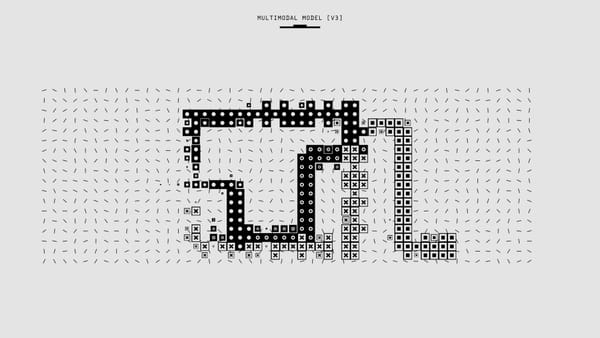
multimodal AI How Do I Get Started with Multimodal AI? A Practical Guide to Vision, Audio, and Multimodal Models in 2026 Multimodal AI has moved from research curiosity to production necessity in 2026. This practical guide covers getting started with vision, audio, and video models including GPT-4o, Gemini 2.0, and Claude 3.5 Sonnet—with implementation steps, architectures, and production considerations.
quantization What Is Quantization and Why Does It Matter for Running AI Models Locally? Quantization makes large language models run on consumer hardware by compressing model weights. Learn what Q4_K_M, Q5_K_M, and Q8_0 mean—and which to choose.
AI Models Which AI Model Should I Use for My Project? A Practical Decision Guide for 2026 Stop guessing which AI model to use. We compared GPT-5.4, Claude Opus 4.6, Gemini 3.1 Pro, Llama 4, and DeepSeek with real benchmarks and pricing. Here's exactly which model wins for coding, research, cost-efficiency, and production workloads.
AI What Is an AI Context Window and Why Does It Matter in 2026? A common question in AI communities keeps resurfacing: people upload entire PDFs to ChatGPT and watch it fail halfway through. The culprit? Something called a context window.
LLM How Do I Reduce Hallucinations in My AI Application? A Production-Ready Guide for 2026 Hallucinations remain the biggest challenge in deploying LLMs at scale. This comprehensive guide covers production-tested strategies for detection, prevention, and continuous monitoring—from RAG optimization to LLM-as-judge evaluation.
AI Agents How Do I Build an AI Agent That Actually Works in Production? Most AI agents work perfectly in demos but fail in production. Learn the 7 critical failure modes killing deployed agents and the architecture patterns that actually work.
RAG Fine-Tuning vs RAG: Which Should I Use for My AI Project? A Developer's Decision Guide for 2026 The question keeps surfacing in AI communities: Should you fine-tune a model or use RAG? This comprehensive guide cuts through the noise with a practical framework, real cost comparisons, and the hybrid approaches that actually work in 2026 production environments.
AI Will AI Replace Software Engineers in 2026? Here's What the Data Actually Shows AI coding tools like Claude and Cursor have sparked fears that software engineering is dying. But job data shows the opposite: developer positions are up 11% annually. The reality? AI isn't eliminating engineers—it's changing what they do. Here's who faces real risk and who's thriving in 2026.
AI Agents How Are AI Agents Different from ChatGPT? A Complete Technical Breakdown for 2026 A common question in AI communities is: What's the real difference between an AI agent and ChatGPT? The confusion is understandable—the AI industry has a terminology problem. Here's a complete technical breakdown of how LLMs differ from AI agents and why it matters for developers and users.
multimodal AI What Is Multimodal AI and Why Is It Reshaping Technology in 2026? Multimodal AI is reshaping technology in 2026 by enabling systems that process text, images, video, and audio simultaneously. This comprehensive guide explains how these systems work, compares leading models, and reveals which excels at specific tasks.
AI Career Is It Too Late to Start an AI Career in 2026? A common question circulating in AI communities: With AI advancing so rapidly, has the window of opportunity closed for newcomers? Here's what the data actually shows about the 2026 AI job market and why it's not too late—if you understand how the game has changed.
AI Models Which AI Model Should I Use for My Project? A Developer's Guide to Choosing Between GPT-4, Claude, Gemini, and Open Source in 2026 Struggling to choose between GPT-4, Claude, Gemini, and open source models? This practical guide breaks down the four factors that actually matter: task quality, cost per token, privacy guarantees, and latency — with specific recommendations for every use case.
AI How Do I Actually Get Started With AI and Machine Learning in 2026? A comprehensive 12-month roadmap for learning AI and machine learning in 2026. From Python basics to deep learning and LLMs—free resources and real projects included.
local AI How Much RAM and GPU Do You Actually Need to Run AI Models Locally in 2026? A common question in AI communities: How much hardware do you actually need to run AI models locally? This guide cuts through the confusion with specific numbers, real-world benchmarks, and build recommendations for every budget—from $800 entry builds to $3,500+ enthusiast setups.
AI Image Generation What Are the Best AI Image Generation Tools in 2026? Midjourney vs DALL-E vs Flux vs Stable Diffusion AI image generation reached photorealistic quality in 2026. This comprehensive comparison breaks down Midjourney V7, DALL-E 4, Flux 2, and Stable Diffusion 3.5—covering pricing, quality differences, and which tool fits your specific use case.
AI Reasoning When Should I Use Reasoning Models Like o3 and DeepSeek-R1 Instead of Regular AI Models? Reasoning models promise better accuracy through "slow thinking," but when do they justify higher costs and slower speeds? This guide breaks down the practical decision framework for choosing between reasoning models (o3, DeepSeek-R1) and traditional LLMs.
AI Agents How Do AI Agents Actually Work and When Should I Use Them Instead of Regular LLMs? AI agents are transforming how we build software—but how do they actually work? This comprehensive guide explains the perception-reasoning-action loop, when to use agents versus regular LLMs, and how to build reliable autonomous systems in 2026.
AI Fine-Tuning vs RAG: Which Should I Use for My AI Project in 2026? The eternal question in AI development: fine-tune a model or use RAG? Most teams choose wrong. Here's the practical framework for making the right decision in 2026.
AI hallucinations Why Does AI Hallucinate and How Can You Prevent It? A Complete Guide to Understanding and Avoiding False AI Outputs AI hallucinations—when models confidently generate false information—remain one of the biggest challenges in 2026. This comprehensive guide explains why hallucinations happen, the real-world costs, and practical strategies to prevent them whether you're an end-user or developer.
AI What's the Most Useful Thing an LLM Does for You That Isn't Writing or Coding? Most people use LLMs for writing and coding. But Reddit users revealed something surprising: the real value lies in thinking, learning, and decision-making. Here's how AI is becoming a cognitive partner.
LLM How Do I Choose the Right LLM for My Project in 2026? A Developer's Practical Framework With dozens of capable large language models now available, how do you actually pick the right one? This guide cuts through the noise with concrete recommendations, real pricing data, and a four-step decision framework that matches models to actual use cases—not marketing claims.
TinyML How Do You Run AI Models on Extremely Limited Hardware? A Deep Dive Into TinyML and Edge AI From Game Boy consoles to factory sensors, AI is escaping the data center. Learn the techniques, hardware, and software frameworks enabling machine learning on microcontrollers with just kilobytes of memory.