
What Are Mixture of Experts (MoE) Models and How Do They Actually Work? A Complete Guide for 2026
A common question in AI communities: What exactly are Mixture of Experts models? Discover how this architecture enables trillion-parameter models with efficient sparse activation, powering GPT-4 and Mixtral.
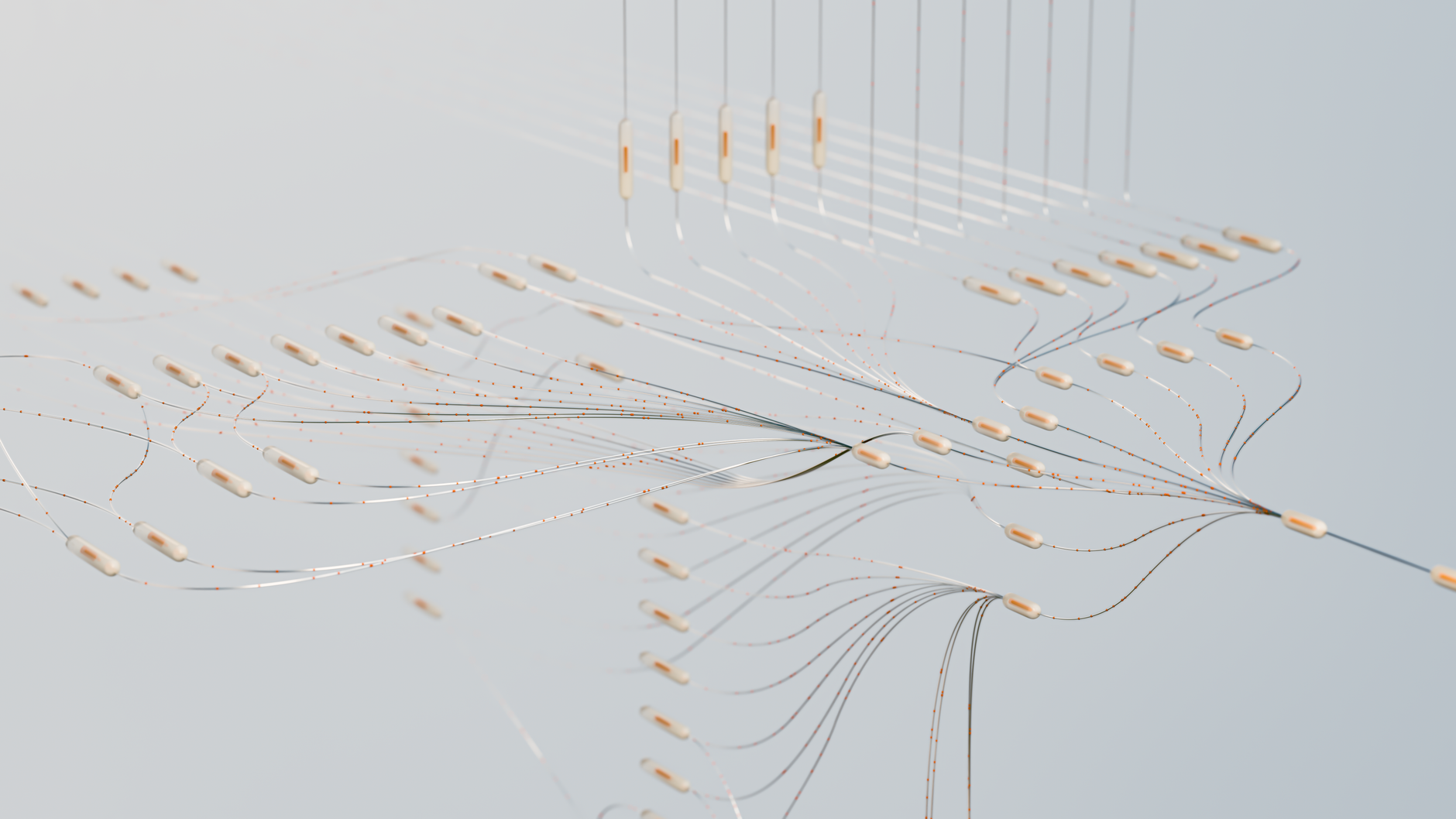
A common question in AI communities like r/LocalLLaMA keeps surfacing: "Can someone explain what a Mixture-of-Experts model really is?" The concept sounds complex, but the underlying principle is surprisingly intuitive—and it's powering some of the most capable AI models in existence today, including GPT-4 and Mixtral.
Mixture of Experts (MoE) has become one of the most important architectural innovations in modern deep learning. It allows models to scale to trillions of parameters while keeping computational costs manageable. If you've ever wondered how AI systems can seem to "know" so much without requiring datacenter-scale resources for every query, MoE is a big part of the answer.

The Core Problem MoE Solves
Traditional dense neural networks activate every single parameter for every single input. If you have a 100 billion parameter model, all 100 billion parameters participate in computing every token. This is computationally expensive and, it turns out, quite wasteful.
Researchers noticed something interesting: not every part of a model needs to work on every type of input. The portion of the network that excels at understanding Python code doesn't need to activate when you're asking about baking recipes. The mathematical reasoning circuits can stay dormant during creative writing tasks.
The insight behind Mixture of Experts is elegant: why activate the entire model when only a small subset of specialized "experts" are relevant to the current input?
How MoE Architecture Actually Works
At its heart, an MoE model consists of three key components working together:
1. The Experts
These are specialized neural network modules—essentially smaller neural networks within the larger model. A typical MoE layer might contain 8, 16, 64, or even more experts. Each expert is trained to handle specific types of inputs or tasks.
Crucially, experts emerge their specializations organically. Nobody explicitly tells Expert 3 to handle code or Expert 7 to handle mathematics. Through the training process, the routing mechanism learns that sending certain token patterns to specific experts produces better results. The experts naturally develop expertise in the types of inputs they receive most frequently.
2. The Router (Gating Network)
The router is a lightweight neural network that examines each input token and decides which experts should process it. For a given input, the router outputs a probability distribution across all available experts.
In practice, modern MoE systems use sparse routing—typically activating only 1 or 2 experts per token rather than blending all of them. This sparsity is what makes MoE computationally efficient despite having massive total parameter counts.
3. The Aggregation Mechanism
After the selected experts process the input, their outputs are combined (usually weighted by the router's confidence scores) to produce the final result for that layer.
The Training Process: How Specialization Emerges
Here's where MoE gets fascinating. During training, tokens like "function," "array," or "def" initially get distributed randomly across different experts. But through backpropagation, the network discovers patterns.
The router learns that sending code-related tokens to Expert 3 produces lower loss than scattering them across multiple experts. Expert 3, receiving more code tokens, develops weights optimized specifically for understanding programming syntax and semantics. A virtuous cycle emerges: better routing leads to more specialized experts, which leads to better routing.
Load Balancing: The Engineering Challenge
MoE architectures face a critical problem: what if the router decides Expert 1 is amazing and tries to send everything there? That expert would become overwhelmed while others sit idle. This is the load balancing problem.
Modern MoE systems employ several techniques to ensure even expert utilization:
Auxiliary Loss Functions: Training includes penalties for imbalanced routing distributions. If the router favors certain experts too heavily, the loss function increases, encouraging more equitable distribution.
Expert Capacity Factors: Each expert has a maximum number of tokens it can process per batch. Once an expert hits capacity, remaining tokens get routed to alternatives or skip the MoE layer entirely.
Load-Balancing Loss: This specifically encourages the router to distribute tokens uniformly across experts while still maintaining routing quality.
Why MoE Matters: The Efficiency Revolution
The numbers behind MoE are striking. A model like Mixtral 8x7B has approximately 47 billion total parameters but only uses about 13 billion active parameters per token. That's roughly 4x more total knowledge than a comparable dense model, with similar computational requirements during inference.
This efficiency unlocks several advantages:
Scale Without Prohibitive Costs: Models can grow to hundreds of billions or even trillions of parameters without requiring proportional increases in compute per token.
Specialized Knowledge: Different experts can develop deep expertise in distinct domains—programming languages, mathematical reasoning, creative writing, scientific concepts.
Faster Training: Because each expert sees only a subset of relevant data, they can converge faster on their specializations.
Real-World Applications in 2026
MoE architecture isn't theoretical—it's deployed in production systems you might use daily:
GPT-4: While OpenAI hasn't published complete architecture details, evidence suggests GPT-4 uses MoE with multiple expert sets across its layers.
Mixtral 8x7B and 8x22B: Mistral's open-weight models demonstrate state-of-the-art performance using MoE, outperforming much larger dense models on many benchmarks.
DeepSeek-V2: This Chinese LLM uses an innovative MoE variant with shared experts and routed experts, achieving remarkable efficiency.
Switch Transformers: Google's research demonstrated scaling to trillions of parameters using extreme sparsity (activating just 1 expert per token).
The Counterarguments: MoE Limitations
MoE isn't a magic solution. Several challenges limit its applicability:
Memory Requirements: While compute scales sub-linearly, you still need to load all experts into memory. A 1 trillion parameter MoE model requires 1 trillion parameters worth of RAM/VRAM, even if only a fraction activates per token.
Training Instability: The router can become unstable during training, especially early on. Getting the load balancing right requires careful tuning.
Batch Size Sensitivity: MoE efficiency depends on having enough tokens in a batch to keep all experts busy. Small batch sizes can lead to poor GPU utilization.
Communication Overhead: In distributed training, different experts might live on different GPUs. Routing tokens between devices adds communication latency.
MoE Variants and Innovations
The field continues evolving. Recent innovations include:
Shared Experts: Some architectures designate certain experts as "shared"—always active for every token—while routing to specialized experts conditionally. This provides a base capability layer plus specialized modules.
Hierarchical MoE: Multiple levels of routing, where coarse categories route to intermediate routers that then select fine-grained experts.
Task-Specific Expert Selection: Fine-tuning approaches that freeze most experts while adapting only a subset for specific downstream tasks.
Practical Implications for Developers
If you're building with AI in 2026, understanding MoE helps you make better decisions:
Inference Cost: MoE models often cost less per token than dense models of similar quality because you're only paying for active parameters.
Latency Considerations: The routing step adds minimal overhead, but expert switching can cause memory access patterns that differ from dense models.
Fine-Tuning Strategy: When fine-tuning MoE models, you might want to freeze most experts and only train the router plus a few relevant experts for your domain.
So What Does This Mean for AI's Future?
Mixture of Experts represents a fundamental shift in how we think about model scale. The old assumption—that bigger models require proportionally more compute—is being overturned. MoE enables a decoupling: total model capacity can grow dramatically while per-token costs grow modestly.
This has profound implications. It means AI systems can accumulate vast stores of specialized knowledge—expertise in medicine, law, engineering, creative arts, programming languages—without becoming prohibitively expensive to run. Each expert becomes a specialist, and the router becomes an efficient triage system directing queries to the right specialist.
The next time you interact with a large language model and marvel at its breadth of knowledge, remember that it's probably not one giant brain working in unison. It's more like a hospital's specialist departments—each expert focused on what they do best, coordinated by an intelligent routing system that gets you to the right specialist for your needs.
And that specialization happens automatically, emergently, through the beautiful mathematics of gradient descent and backpropagation. Nobody programs the experts to be experts. They become experts because it's the most efficient solution the network can find.
Sources
- Shazeer, N., et al. (2017). "Outrageously Large Neural Networks: The Sparsely-Gated Mixture-of-Experts Layer." arXiv:1701.06538.
- Fedus, W., Zoph, B., & Shazeer, N. (2022). "Switch Transformers: Scaling to Trillion Parameter Models with Simple and Efficient Sparsity." Journal of Machine Learning Research.
- Mistral AI. (2023). "Mixtral 8x7B" - Technical documentation and model release.
- r/LocalLLaMA Community. (2024-2025). "Can someone explain what a Mixture-of-Experts model really is?" Reddit Discussion Thread.
- "A Visual Guide to Mixture of Experts (MoE)." r/LocalLLaMA Community Guide.
- Wikipedia Contributors. "Mixture of experts." Wikipedia, The Free Encyclopedia.