
Will AI Replace Software Engineers in 2026? Here's What the Data Actually Shows
AI coding tools like Claude and Cursor have sparked fears that software engineering is dying. But job data shows the opposite: developer positions are up 11% annually. The reality? AI isn't eliminating engineers—it's changing what they do. Here's who faces real risk and who's thriving in 2026.
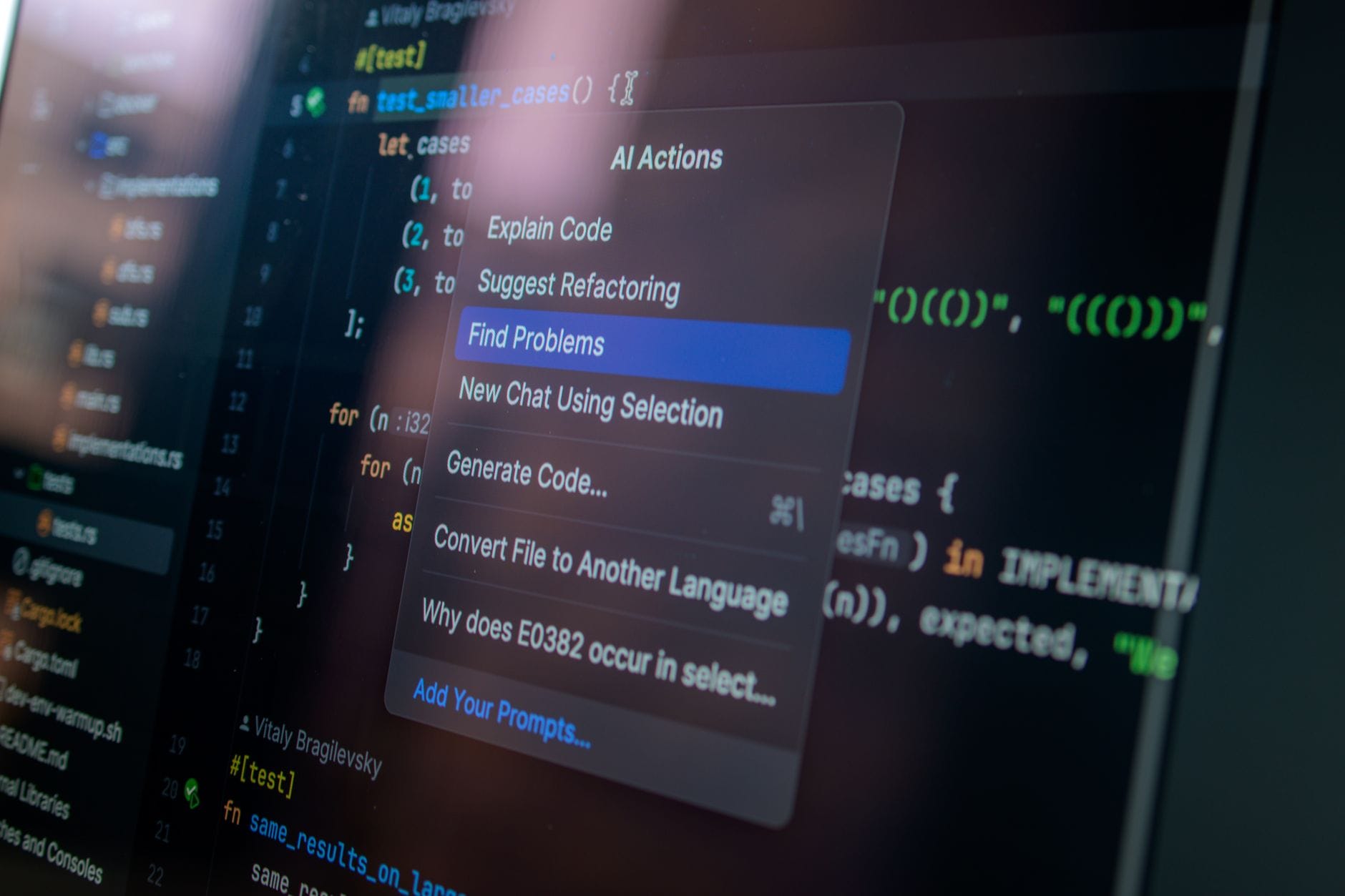
A common question in AI communities and computer science departments across the country has reached a fever pitch in 2026: Are software engineering jobs disappearing? The fear is understandable. Tools like OpenAI's Codex, Anthropic's Claude Code, and Cursor can now generate entire functions, debug complex issues, and even build complete applications from natural language descriptions. Salesforce CEO Marc Benioff announced his company stopped hiring engineers last year. Nearly half of Americans believe AI will reduce software jobs. Computer science students are panicking.
But here's the surprising reality the headlines miss: software engineering jobs are growing, not shrinking. The Bureau of Labor Statistics projects 15% employment growth for software developers by 2034. Indeed listings for software engineers are up 11% annually—faster than overall job postings. Something counterintuitive is happening beneath the surface, and understanding it is crucial for anyone in or entering the field.

The Productivity Paradox: Why Better Tools Mean More Demand
When AI coding tools emerged, the immediate assumption was simple math: if developers become twice as productive, companies need half as many of them. This intuition feels correct, but economic history repeatedly proves it wrong. Consider what happened with Excel. When spreadsheet software automated complex calculations in the 1980s, demand for accountants and financial analysts didn't collapse—it exploded. Tasks that were previously uneconomical became feasible. The same pattern is emerging with AI and software.
According to McKinsey's 2026 analysis, AI coding tools are boosting developer productivity by 20-45% on routine tasks. But rather than reducing headcount, companies are expanding software budgets and increasing engineering teams. Bank of America's latest survey of technology executives shows a clear pattern: as AI makes coding more efficient, organizations find new software projects worth pursuing. The constraint was never developer time—it was economic viability.
Magdalena Balazinska, director of the University of Washington's Paul G. Allen School of Computer Science & Engineering, recently addressed this panic directly in an email to over 2,000 undergraduates: "AI is not killing your job options. It's expanding them." Her message reflects what hiring data actually shows. Most computer science graduates at top programs are still securing full-time engineering positions. The pipeline from education to employment hasn't broken—it's evolving.
The Real Shift: From Coding to Orchestration
AI isn't eliminating software engineers. It's changing what they do. The transformation looks less like job elimination and more like job evolution—with significant consequences for those who fail to adapt.
Here's the breakdown of how work is shifting:
What's Decreasing
Routine coding—the boilerplate, the repetitive patterns, the standard library implementations—is increasingly handled by AI. Junior developers spent years learning to write CRUD operations, API endpoints, and basic authentication flows. Today, Claude Code or Cursor can generate these in seconds. This isn't trivial work; it's foundational work that previously consumed enormous amounts of developer time.
What's Increasing
Engineers are spending more time on system architecture, AI agent orchestration, and strategic decision-making. Amanda Richardson, CEO of CoderPad, describes the new reality: "The best engineers are spending all day, every day with AI and using it to make their designs better." Instead of typing out implementations line by line, senior developers are increasingly managing swarms of AI-powered coding agents—autonomous bots that complete tasks while humans focus on design and direction.
This mirrors what happened in manufacturing. When robots took over welding and assembly, human jobs didn't vanish—they shifted to robot programming, maintenance, and process optimization. The humans who thrived were those who learned to work with the machines, not against them.
The Bifurcation: Two Types of Engineers Emerge
The chaotic transition period we're experiencing isn't affecting all engineers equally. The field is splitting into two distinct categories with very different trajectories.
AI-Enabled Engineers are thriving. They've integrated tools like GitHub Copilot, Claude, and Cursor into their workflows. They use AI for initial drafts, debugging, and exploring unfamiliar codebases. They spend their cognitive energy on system design, user experience, and architectural decisions. Their productivity has genuinely increased, making them more valuable to employers, not less.
Reluctant Adopters face a different reality. Engineers who view AI tools as threats or gimmicks, who insist on writing every line manually, who haven't adapted their workflows—these professionals are experiencing exactly the displacement they feared. Not because AI replaced them, but because AI-enabled colleagues deliver equivalent results faster. In a competitive labor market, inefficiency becomes unemployability.
This creates a harsh but important truth: the engineers at risk aren't being replaced by AI. They're being replaced by other engineers using AI.
The Skills That Matter in 2026
If routine coding is increasingly automated, what capabilities actually differentiate engineers now? The answer reveals why job growth persists despite AI advancement.
System Design and Architecture: AI generates code snippets, not coherent systems. Understanding how components interact, designing for scale, and making trade-offs between performance and maintainability remain deeply human skills. These require contextual understanding of business constraints, user needs, and technical debt—factors AI struggles to weigh appropriately.
AI Collaboration and Prompt Engineering: The ability to effectively work with AI tools has become a core competency. Knowing when to use AI, how to prompt it effectively, and how to evaluate its output separates productive engineers from frustrated ones. This isn't about replacing coding knowledge—it's about amplifying it through intelligent tool use.
Problem Decomposition: Breaking complex challenges into manageable pieces that AI can help solve is a distinct skill. The engineers who thrive aren't necessarily writing more code; they're better at structuring problems and orchestrating AI assistance toward solutions.
Domain Expertise: Understanding specific industries—healthcare regulations, financial compliance, e-commerce logistics—provides protection against pure automation. AI generates generic solutions. Real-world software requires contextual knowledge that comes from experience.
The Salesforce Case: Misreading the Signals
Marc Benioff's announcement that Salesforce stopped hiring engineers made headlines worldwide. But the story behind the story matters. Salesforce didn't reduce its engineering workforce through layoffs—it froze hiring while natural attrition occurred. More importantly, this represents a single company's strategy, not an industry trend.
Even within Salesforce, engineers weren't eliminated. They were redirected toward AI integration, system architecture, and managing the very AI systems replacing routine coding. The total engineering hours devoted to software development didn't necessarily decrease—they shifted toward different activities.
Comparing this to broader industry data reveals the danger of overinterpreting individual announcements. While one high-profile company adjusted hiring practices, industry-wide demand for software engineers increased. The plural of anecdote isn't data, and exceptional cases make misleading headlines.
What This Means for Different Stakeholders
For Aspiring Engineers
The path into software development has changed, but the destination remains viable. Computer science education is still valuable, though the emphasis is shifting. Schools that integrate AI tool usage into their curriculum are preparing students better than those treating AI as cheating. Understanding fundamentals remains essential—AI generates code faster, but debugging AI-generated code requires knowing how code actually works.
The key adaptation: embrace AI tools early and deeply. Treat them as force multipliers, not crutches. The engineers who thrive will be those who can write code without AI but choose to use it strategically.
For Current Engineers
The uncomfortable reality: adaptation is mandatory, not optional. Engineers who refuse to integrate AI into their workflows face genuine career risk—not from AI itself, but from AI-enabled competition. The good news: adaptation pays immediate dividends. Engineers reporting 20-45% productivity gains from AI tools are simultaneously improving their job security and their leverage for compensation.
Focus on the irreplaceable aspects of engineering: architectural decisions, technical strategy, mentoring, and domain expertise. These capabilities compound over time and resist automation.
For Hiring Managers
Assessing engineering candidates requires updated criteria. Traditional coding interviews—algorithms on whiteboards or timed LeetCode problems—increasingly measure skills AI handles easily. Better evaluation approaches include system design discussions, code review exercises, and collaborative problem-solving sessions where candidates demonstrate how they work with AI tools.
The engineers worth hiring aren't those who code fastest without assistance. They're those who produce the best outcomes using every tool available—including AI.
The Long View: Historical Precedent
We've seen this movie before. When compilers automated assembly language programming, programmers didn't disappear—they multiplied. When high-level languages automated memory management, developers became more productive, not redundant. When open source democratized infrastructure, engineering jobs expanded into new domains.
Each automation wave triggered the same anxiety we're experiencing now. Each time, the doomsayers were wrong—not because automation failed, but because human ingenuity found new problems worth solving once old constraints disappeared.
Software engineering in 2026 sits at a similar inflection point. AI handles the mechanical aspects of coding, freeing humans to focus on higher-level challenges. The total amount of software in the world will increase dramatically because the cost of creating it has decreased. And someone needs to design, orchestrate, and maintain that software.
So Will AI Replace Software Engineers?
The honest answer: partially, yes. Routine coding as traditionally practiced is being automated. Engineers who only provide manual code implementation face genuine displacement. The job of "person who types instructions computers understand" is indeed shrinking.
But software engineering was never really about typing code. It was always about understanding problems, designing solutions, and managing complexity. These core competencies remain stubbornly human. AI generates implementations; humans determine what should be implemented and why.
The software engineers of 2026 and beyond won't disappear. They'll evolve into something more powerful—architects orchestrating AI capabilities toward human goals. Those who embrace this evolution will find unprecedented opportunity. Those who resist it will struggle against an economic reality that favors augmented productivity over stubborn traditionalism.
The question was never whether AI would change software engineering. The only question was whether engineers would change with it. The data suggests most are adapting—and the field is growing as a result.
Sources
- CNN Business - "The demise of software engineering jobs has been greatly exaggerated" (April 2026)
- McKinsey & Company - AI Developer Productivity Analysis (2026)
- Bureau of Labor Statistics - Occupational Outlook for Software Developers (2024-2034 projections)
- Citadel Securities - Indeed Job Posting Analysis (2026)
- Bank of America - Technology Executive Survey (2026)
- University of Washington Paul G. Allen School of Computer Science & Engineering