
Colossal Biosciences' Artificial Egg Just Hatched 26 Chicks — And It Could Bring Back the Dodo
Colossal Biosciences unveiled a 3D-printed artificial egg that successfully hatched 26 chickens. Here's how the silicone-membrane breakthrough could resurrect the dodo, the moa, and rescue living species on the brink of extinction.
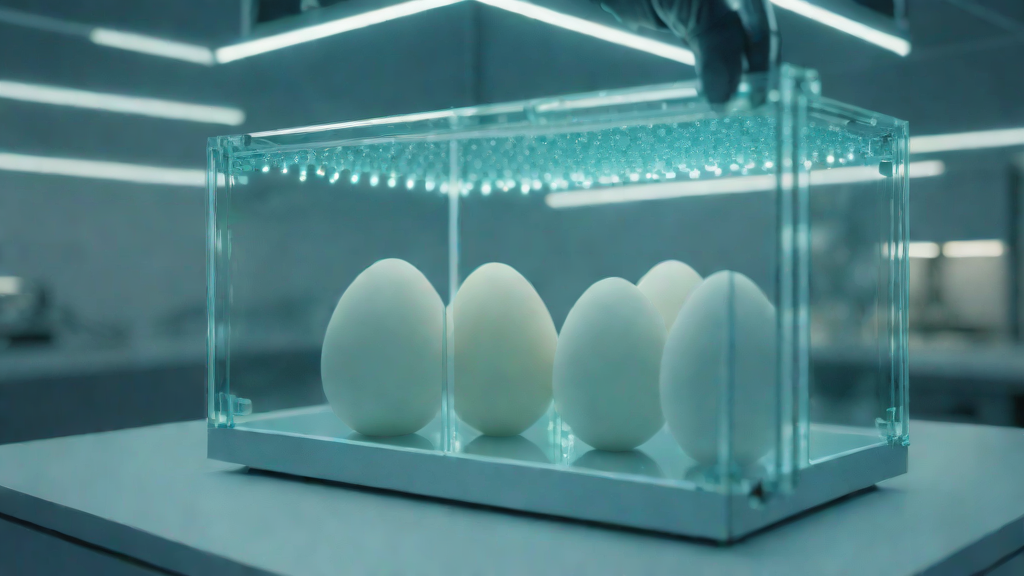
Colossal Biosciences just dropped one of the most consequential developments in synthetic biology this year. The Texas-based de-extinction company announced on May 19, 2026 that its artificial egg — a 3D-printed, silicone-membrane synthetic shell — successfully incubated and hatched 26 healthy chickens. It is the first time a vertebrate has been brought to term inside a fully engineered egg.
For Colossal, the chicks are not the point. The point is what comes next: a working artificial womb for birds. And if the technology holds up under independent scrutiny, it could be the missing piece for resurrecting species the planet lost centuries ago — the dodo, the New Zealand moa, the great auk — alongside saving the ones we are still about to lose.
What Colossal Biosciences actually built
The Colossal artificial egg is a two-component system:
- A semi-permeable silicone-based membrane engineered to replicate the gas-exchange function of a natural eggshell. It lets oxygen pass through, retains moisture, and blocks microbial contamination.
- A rigid hexagonal 3D-printed support cup that holds the membrane in shape and stabilizes the developing embryo.
Together they act like a transparent womb — and unlike a natural eggshell, scientists can observe and intervene at every developmental stage. That single fact is what makes the technology potentially transformative.
Why this matters for de-extinction
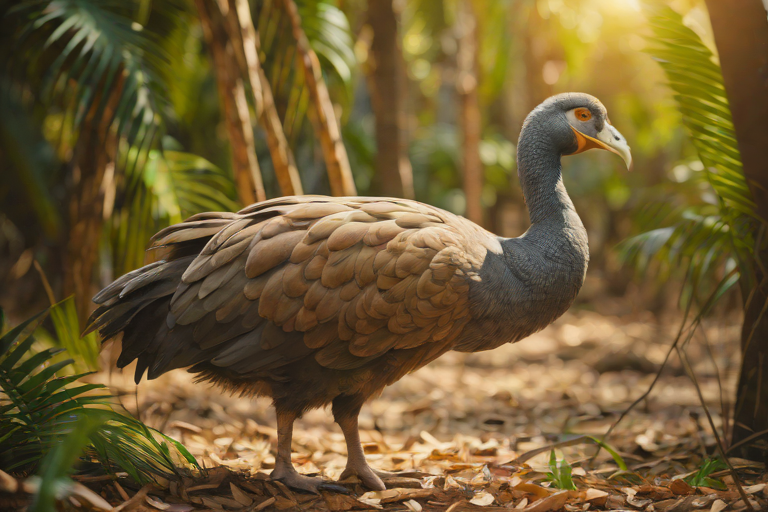
Colossal's flagship projects — the woolly mammoth, the thylacine, the dodo, and the moa — all share one logistical problem: you cannot use the extinct species' own biology as a surrogate. Mammoths can in theory be brought to term in an Asian elephant. Thylacines in a fat-tailed dunnart. But for extinct birds, the picture is far harder.
Birds develop inside hard-shelled eggs that must be deposited by a living female. The closest living relatives of the dodo and moa — the Nicobar pigeon and the emu, respectively — are vastly smaller than their extinct cousins. A genetically engineered "moa-like" embryo physically does not fit inside an emu egg. A dodo embryo would not fit inside a Nicobar pigeon's.
The artificial egg sidesteps that problem entirely. Engineer a chimeric embryo with the genetic edits you want, transfer it into a properly sized synthetic shell, and incubate it ex vivo to hatching. No surrogate needed. No size limit imposed by the surrogate's anatomy.
How the moa de-extinction plan now works
The roadmap Colossal sketched out in its announcement looks roughly like this:
- Sequence and edit: Take an emu genome and introduce the genetic differences that define the South Island giant moa — large body size, flightlessness traits, plumage, and so on.
- Develop the early embryo inside a regular emu egg, where the early stages of avian development are similar across species.
- Transfer to the artificial egg once the embryo outgrows what the natural shell can accommodate.
- Hatch ex vivo in the synthetic incubator.
The same playbook applies to the dodo, with the Nicobar pigeon as the genetic starting point.
The conservation angle that's getting buried in the hype
De-extinction makes headlines. The under-discussed application — and arguably the bigger one — is for critically endangered living species. Around the world, conservationists run captive-breeding programs for birds with vanishingly few breeding adults left: the kakapo, the California condor, the Spix's macaw. Every failed egg or unsuccessful hatch is an irreplaceable loss.
A reliable artificial egg would let conservationists:
- Salvage embryos from eggs cracked or abandoned by inexperienced mothers
- Reduce the genetic bottleneck of breeding programs by hatching more offspring per breeding event
- Observe developmental abnormalities early enough to intervene
If Colossal's technology generalizes, the immediate impact on living bird conservation could be larger than the eventual dodo and moa work it was built for.
The caveats — and they're real
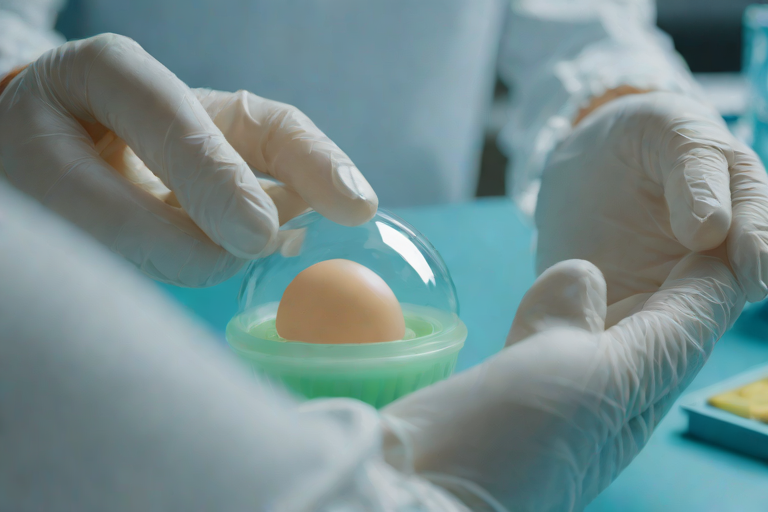
This is the part that deserves a sober look. Colossal has not released several things that scientists usually expect before declaring a breakthrough:
- No peer-reviewed paper. The company has stated it does not plan to publish a preprint or submit to a journal in the near term.
- No reported hatch rate. 26 chicks hatched, but Colossal has not disclosed how many eggs were attempted. A 26-out-of-30 success rate would be remarkable. A 26-out-of-3,000 success rate would be a curiosity, not a platform.
- No long-term outcomes published. Whether the chicks have normal life expectancy, fertility, or behavior is not yet on the record.
None of those is a deal-breaker. Industry research often outpaces journal publication, and Colossal is a private company with commercial reasons to control how data is released. But for now, the artificial egg is a corporate announcement supported by photographs and a small number of live chicks — not yet a fully validated scientific result.
What to watch next
The honest near-term tests are these:
- Will Colossal share methods? Even without a journal paper, independent groups will want to replicate. Methods that resist replication will not survive scrutiny.
- Will the artificial egg work for larger birds? Chickens are a 21-day incubation. Moa eggs would be 50+ days. The engineering challenges scale non-linearly.
- Will conservation groups adopt the platform? If endangered-species breeding programs start using it within the next 12–24 months, the technology is real. If they don't, it may signal hidden limitations.
The bigger picture
An artificial vertebrate egg, if it generalizes, is one of those quiet breakthroughs that reshape multiple fields at once. It is a developmental-biology research tool, a conservation rescue platform, and the missing logistics piece for de-extincting any bird humanity has ever lost. It is also — and this is the part Colossal's marketing leans hardest on — a step toward making "lost species" a recoverable category instead of a permanent one.
Whether the dodo actually walks again before 2030 will depend on a hundred subsequent breakthroughs in genome engineering, embryology, and ecology. But for the first time, the eggshell is no longer the bottleneck.
Neural Digest will continue covering Colossal Biosciences' de-extinction projects. The artificial egg announcement was made on May 19, 2026; this article reflects publicly available information as of publication.