
The AI Classroom Revolution: How Artificial Intelligence Is Transforming Education in 2026
AI-powered educational tools now reach over 500 million students worldwide. Discover how artificial intelligence is reshaping classrooms, personalizing learning, and transforming the role of teachers in 2026.
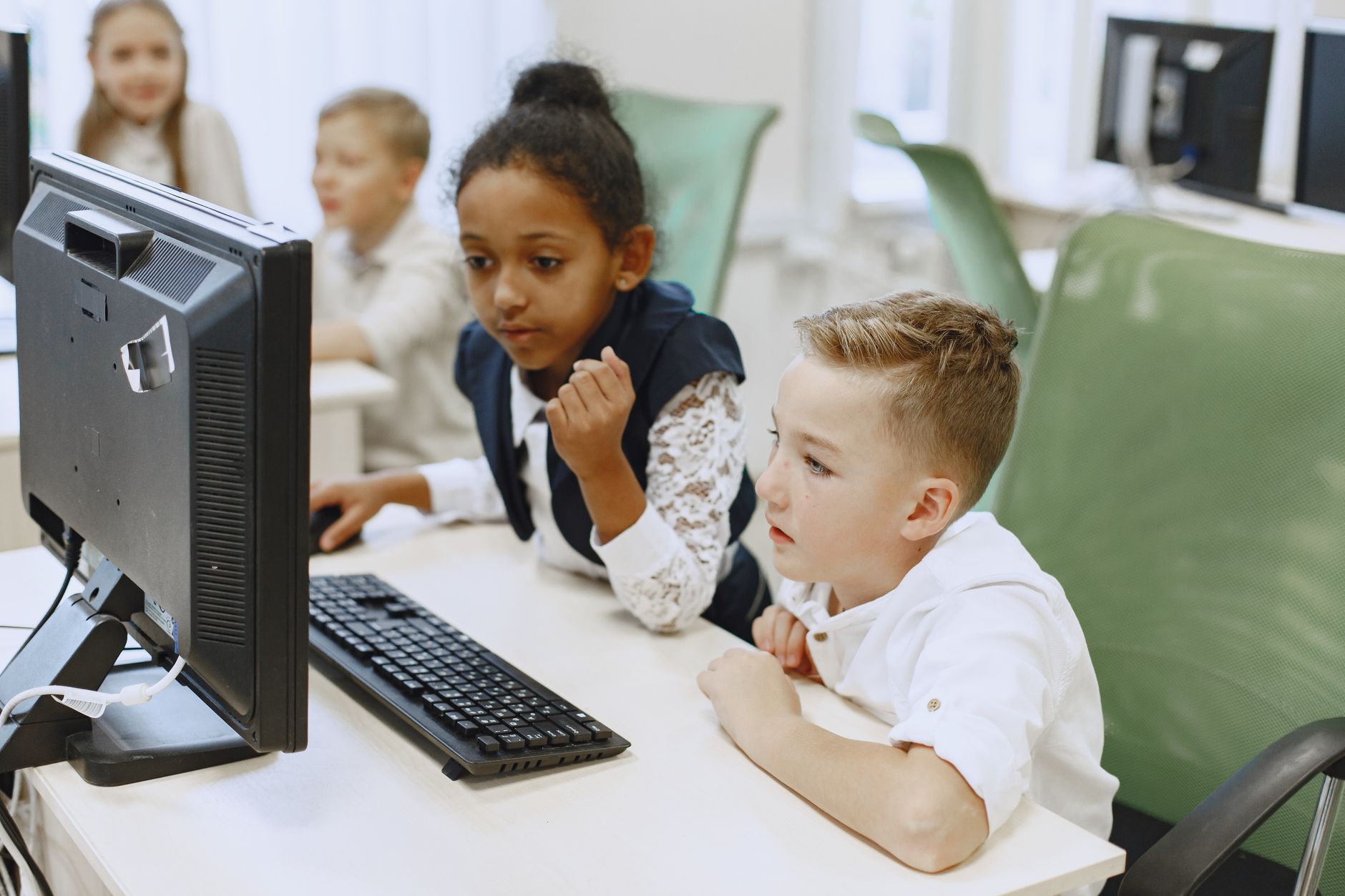
Walk into a classroom in 2026, and you might not immediately notice what's changed. Students still sit at desks. Teachers still guide discussions. But look closer, and you'll see the invisible infrastructure reshaping how knowledge is delivered, absorbed, and assessed. Artificial intelligence has moved from experiment to essential—quietly revolutionizing the $5 trillion global education industry.
The numbers tell a compelling story. AI-powered educational tools now reach over 500 million students worldwide, up from 180 million just two years ago. School districts that were skeptical of edtech during the pandemic are now allocating 15-20% of their technology budgets specifically to AI implementations. The question is no longer whether AI belongs in classrooms, but how deeply it will transform the fundamental relationship between teacher, student, and knowledge.

Personalized Learning at Scale
The most profound impact of AI in education isn't automation—it's personalization. Traditional classrooms force 30 students with different learning speeds, strengths, and gaps to move through material at the same pace. AI systems are dismantling this one-size-fits-all approach in real time.
Adaptive learning platforms now analyze student responses millisecond by millisecond, identifying exactly where comprehension breaks down. When a student struggles with quadratic equations, the system doesn't just mark answers wrong—it detects whether the gap lies in factoring, understanding variables, or applying the quadratic formula. Then it serves targeted micro-lessons addressing that specific gap.
The results are striking. Schools using comprehensive AI tutoring systems report 34% improvement in standardized test scores compared to control groups. More importantly, achievement gaps between high and low performers are narrowing. Students who previously fell behind now receive the equivalent of a personal tutor available 24/7, asking questions without fear of judgment.
"AI doesn't replace teachers—it amplifies them. The best implementations give educators superpowers: the ability to see exactly what every student needs at any moment." — Dr. Patricia Chen, Stanford Graduate School of Education
The Teacher as Learning Architect
Perhaps the most misunderstood aspect of AI in education is its effect on teachers. Rather than making educators obsolete, early evidence suggests AI is elevating teaching from content delivery to learning design and mentorship.
Administrative tasks that consumed 40% of teacher time—grading routine assignments, tracking attendance patterns, generating progress reports—are increasingly automated. This reclaimed time is being reinvested in the human elements of education: facilitating discussions, providing emotional support, coaching critical thinking, and designing creative projects.
AI-powered analytics dashboards give teachers unprecedented visibility into classroom dynamics. They can see which students are disengaging before they fail, identify optimal groupings for collaborative projects, and track how different teaching strategies affect various learner types. The teacher becomes a data-informed learning architect rather than a content broadcaster.
The Shift in Teacher Training
Teacher preparation programs are racing to catch up. Universities report that coursework in AI literacy, data interpretation, and human-AI collaboration has increased 300% since 2024. New teachers entering the workforce in 2026 expect AI tools as standard equipment, much like their predecessors expected whiteboards and textbooks.
Assessment Without Anxiety
Traditional testing is facing an existential challenge. When AI can write essays, solve math problems, and generate code, measuring student learning through standardized assessments becomes problematic. The education system is responding with a fundamental rethink of how we evaluate knowledge.
Continuous, formative assessment is replacing high-stakes testing in forward-thinking districts. AI systems track learning through natural interactions—analyzing the questions students ask, the mistakes they make and correct, their collaboration patterns, and their creative outputs. This creates a comprehensive learning portrait that captures growth over time rather than performance on a single day.
Some schools are experimenting with "invisible assessment," where learning is measured through project-based work without students even realizing they're being evaluated. AI analyzes the process as much as the product—tracking how students research, iterate, collaborate, and solve problems.
The Challenges We Can't Ignore
The AI education revolution isn't without serious concerns. Privacy advocates warn that continuous monitoring of student learning creates unprecedented data collection on children. Districts must navigate complex questions about who owns student data, how long it's retained, and what happens when students graduate.
Equity remains a critical issue. While wealthy districts deploy sophisticated AI tutors, underfunded schools struggle with basic infrastructure. The risk of a "digital divide" becoming an "AI divide" is real. Students in AI-rich environments may pull decisively ahead of peers without access to these tools.
There's also the question of authenticity. If AI can write essays and solve problems, what skills should students actually develop? Educators are increasingly focusing on what AI can't do well: original thinking, ethical reasoning, creative synthesis, and human connection.
The Cheating Paradox
The rise of AI has made traditional cheating nearly impossible to prevent—and arguably irrelevant. If students can generate perfect homework with a prompt, assigning traditional homework becomes counterproductive. The response is a shift toward in-class, proctored assessments for foundational skills, and authentic, complex projects that resist AI assistance.
What Comes Next
Looking ahead, the integration of AI into education will only accelerate. Predictions for 2027 include AI teaching assistants in every classroom, virtual reality learning environments personalized by AI, and predictive systems that identify learning disabilities months earlier than human observation.
The fundamental transformation may be philosophical. Education is shifting from knowledge transfer to capability development. In a world where AI can access and synthesize all human knowledge instantly, the value of memorizing facts approaches zero. The new currency is knowing what to ask, how to evaluate answers, and why the questions matter.
The classrooms of 2026 are early laboratories for this new paradigm. Success won't be measured by test scores alone, but by whether students graduate equipped to thrive in an AI-augmented world—able to leverage these powerful tools while maintaining the critical thinking and creativity that make us human.
The revolution is already here. The only question is whether our education system can evolve as quickly as the technology transforming it.