
Rent a Human Brain by the Month: Inside FinalSpark’s Living Cloud Compute
A Swiss startup will rent you 16 living human brain organoids over the internet for $500 a month. Here is how the Neuroplatform actually works — and the questions nobody has answered yet.
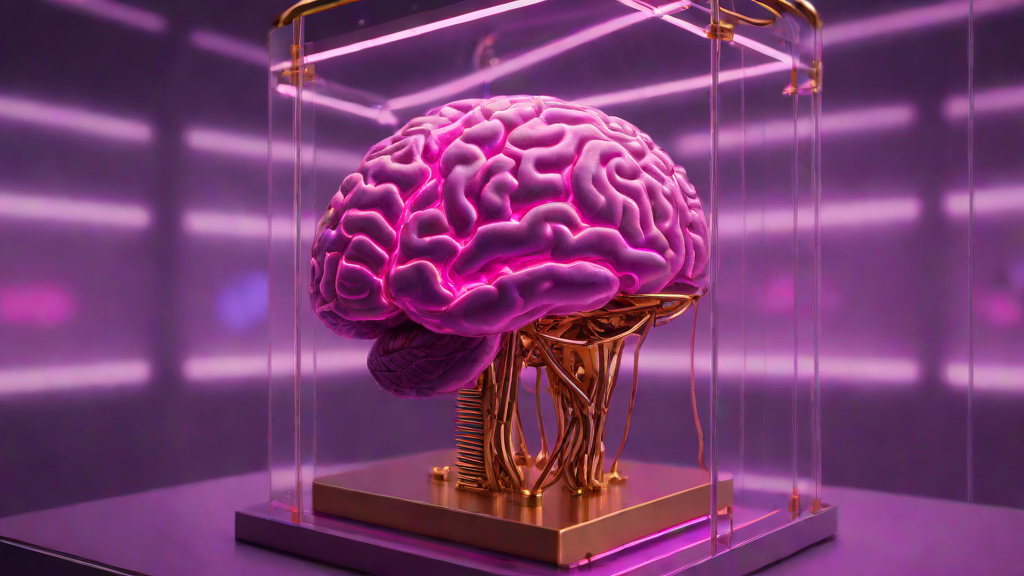
For about the price of a mid-tier GPU instance, you can now rent a piece of a living human brain. Not a metaphor, not a neural network, not a "brain-inspired" chip — actual lab-grown human neurons, alive in a bioreactor in Switzerland, that you talk to over the internet using Python. The company offering this is FinalSpark, and their Neuroplatform may be the strangest piece of cloud infrastructure on the planet right now.
Below: how it works, what it costs, how the data gets in and out, what powers it, how the brains stay alive — and the question almost nobody wants to answer out loud: is this a form of torture?
What FinalSpark Actually Is
FinalSpark is a Swiss biocomputing startup founded by Fred Jordan and Martin Kutter (the same duo behind anti-counterfeit imaging firm AlpVision). Their pitch is simple and audacious: silicon is hitting an energy wall, but biology already solved compute. The human brain runs 86 billion neurons on roughly 20 watts. Replicating that with traditional chips would need an estimated 10 megawatts. So FinalSpark is building the infrastructure to rent out small pieces of real biology — brain organoids — as a cloud service.
The product is called the Neuroplatform. As of this year, 16 living human brain organoids sit in a single rack-style array, with researchers from at least nine universities (including the University of Michigan and the Free University of Berlin) running experiments on them remotely. Academic access starts at $500 per user per month. Selected research projects get it free.
How a Brain-as-a-Service Actually Works
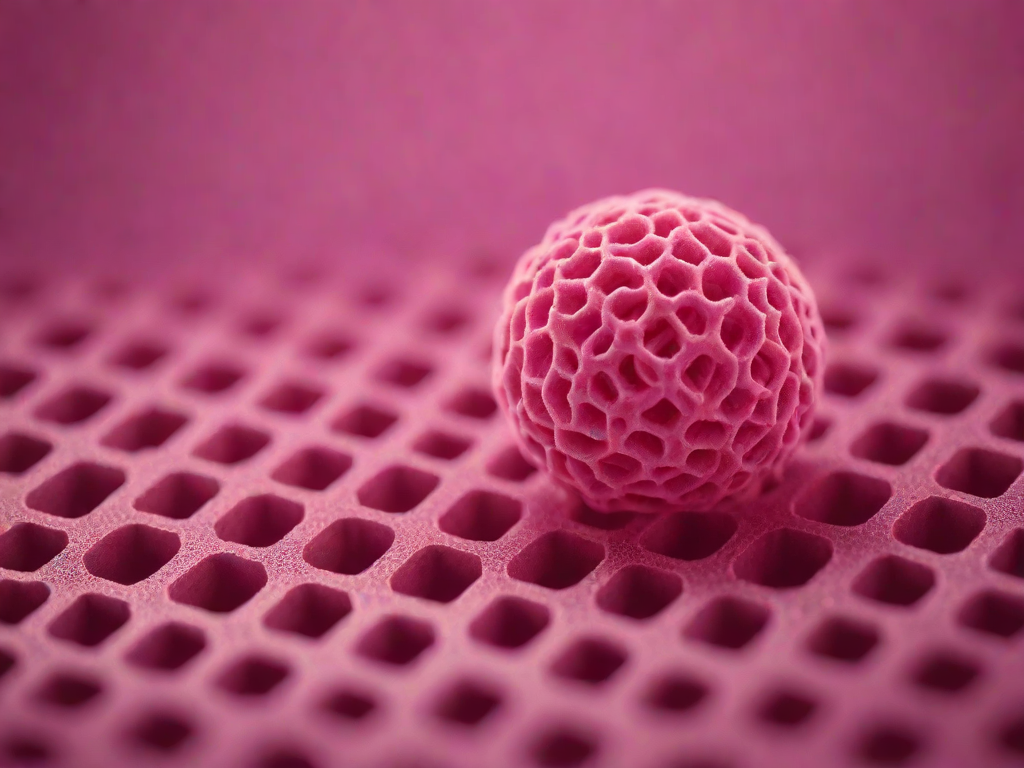
The compute substrate is a brain organoid: a roughly 0.5 mm sphere of living neural tissue grown from induced pluripotent stem cells (iPSCs). Skin or blood cells from a donor are reverse-engineered into stem cells, then coaxed down a neural lineage until they self-organize into a tiny, three-dimensional ball of cortex-like tissue. Each organoid contains around 10,000 neurons.
FinalSpark's hardware stack is:
- 4 Multi-Electrode Arrays (MEAs), each holding 4 organoids — 16 organoids and roughly 160,000 living neurons total.
- 8 electrodes per organoid, driven by Intan RHS 32 controllers at 30 kHz sampling, 16-bit resolution. Electrodes do double duty: they fire stimulation pulses into the tissue, and they record the spikes the tissue fires back.
- A microfluidic life-support loop that perfuses each MEA with warmed nutrient medium, removes waste, and tops off oxygen.
- Monitoring cameras for visual health checks of every organoid.
- UV-controlled "uncaging" lasers that release caged neurotransmitters — most notably dopamine — on demand. This is how the system delivers a "reward" signal during training.
That last bit is the most science-fiction-flavored part. When an organoid produces a desired output, FinalSpark pulses UV light at a specific wavelength into a molecular cage holding dopamine. The cage breaks, dopamine floods the tissue, and the cells receive the chemical equivalent of "good job." It is, functionally, reinforcement learning with neurotransmitters.
Getting Data In and Out
Researchers don't ship CSVs to a Swiss data center. They write Python.
FinalSpark exposes a public Python library and Jupyter Notebook environment that wraps a REST API into the Neuroplatform. Once you have an account, your code can:
- Read raw electrode voltage traces and spike-sorted neural events in real time, 24/7.
- Write stimulation patterns to specific electrodes — single pulses, biphasic trains, custom waveforms — using a helper called
StimParamLoader. - Control peripherals: the perfusion pumps, the cameras, and the UV uncaging lasers (i.e., trigger a dopamine reward).
- Run closed-loop experiments where output spikes drive the next stimulation in milliseconds — the same kind of tight loop you'd use to train a reinforcement-learning agent, except the agent is alive.
FinalSpark says the platform has logged over 18 terabytes of neural data across more than 1,000 organoids in three years. The API is documented openly and a companion repo, FinalSpark-np/np-utils, ships community tooling for things like raw recording extraction.
The Power Consumption Story
This is the headline number that makes investors lean forward: FinalSpark claims its bioprocessor uses up to a million times less energy than a digital chip running comparable operations. The math comes from the underlying biology — a whole human brain consumes ~20 watts; an organoid with 10,000 neurons draws a vanishingly small fraction of that. The supporting infrastructure (incubators, pumps, electrodes, network) does consume real wall power, but the compute element itself is essentially free, energetically, compared to a GPU die dissipating 700 W.
Whether that efficiency translates into useful work on real workloads is the open question. So far, the published demonstrations are pattern-recognition and simple control tasks, not LLM training. But if even narrow workloads can be offloaded to wetware, the energy story alone is enough to justify continued investment.
Keeping the Brain Alive
An organoid is not a chip. It can die. FinalSpark's life-support stack is engineered around three pillars:
- Temperature. The MEAs sit inside incubators held at body temperature.
- Nutrient flow. Microfluidic pumps continuously circulate a defined cell-culture medium — sugars, amino acids, growth factors, oxygenated buffer — across each organoid, while pulling waste out.
- Vigilance. Cameras and electrode-impedance measurements run constant health checks. If an organoid's signal goes quiet, the system flags it.
Early prototypes lasted only a few hours. Today, an organoid on the Neuroplatform survives roughly 100 days. FinalSpark's 2024–2026 roadmap targets 200+ days. Beyond that, the limits are biological: vascularization. Without blood vessels, only the outer ~500 µm of tissue gets enough oxygen, which is why organoids stay tiny. Several groups are working on lab-grown vascular networks; if that lands, organoid lifespan and size could jump dramatically.
The Pros
- Energetic efficiency that silicon cannot match — up to six orders of magnitude on the right tasks.
- Native parallelism. A real neural network with real spike-timing dynamics, free.
- Continuous learning. Organoids appear to physically rewire in response to stimulation, without explicit weight updates.
- Cheap access to a frontier research tool. $500/month gets a graduate student into a field that previously required a wet lab.
- Standardization. Every researcher hits the same hardware with the same API, which makes results reproducible across labs — a rare thing in neuroscience.
The Cons
- You can't program it. There's no compiler from PyTorch to neurons. Useful behavior has to be coaxed out, not deployed.
- Tasks demonstrated so far are tiny compared to what a GPU does. The energy-efficiency claim is real; the practical-throughput claim is not yet proven.
- Organoids die. A 100-day lifespan means your "instance" is finite, and replacement organoids are not bit-identical to the previous one.
- Variability. Two organoids from the same donor batch behave differently. Reproducibility within a single tissue is fine; between tissues, you have noise.
- Regulation is undefined. No country currently has clear rules for using lab-grown human neural tissue as a commercial compute resource.
Is It Torture?
This is the part of the story serious people are now arguing about openly, and it doesn't have a clean answer.
The mainstream scientific consensus today is that brain organoids are not conscious. They have no sensory input, no body, no developmental scaffolding for higher cognition, and they are orders of magnitude smaller and less structured than a real cortex. There are no clinical signs of pain processing. By any reasonable read of current evidence, an organoid does not "experience" stimulation any more than a Petri dish of muscle cells "experiences" being twitched.
But the argument doesn't end there, because the field is moving fast and the framework hasn't caught up. The concerns scientists and ethicists are actually raising:
- The "living hell" scenario. Some bioethicists, including in Nature and STAT, have warned that if a future organoid ever became sentient, it would be sentient with no body, no senses, and no ability to communicate distress. We would have no way to know we'd crossed the line.
- Definitional emptiness. "Consciousness" in this context isn't crisply defined. Without a shared definition, ethical limits are unenforceable. As one researcher put it: if you can't agree on the language, the ethics don't mean anything.
- Dopamine reward as a tell. The training loop uses neurotransmitters known to be valenced in intact brains. If an organoid responds to dopamine release as positive, the symmetric question — does deprivation, or noxious stimulation, register as negative? — becomes harder to wave away.
- Regulatory void. Outside of basic animal-cruelty law, there are no legal limits on what you can do to neural organoids anywhere on Earth. In November 2025, a coalition of researchers publicly called for an international oversight body. Nothing has been created yet.
The honest answer right now is: by current evidence, no, it is not torture — there is nothing in there to suffer. But the reason that answer is unsatisfying is that the technology will keep scaling, and the framework for noticing when the answer flips does not yet exist. FinalSpark is operating well inside the current consensus. The consensus itself is fragile.
What This Means for the Rest of Us
If you're a researcher, the Neuroplatform is genuinely the cheapest way to do real wetware-computing work today. If you're a developer eyeing this as the next AWS — slow down. The platform is a research instrument, not a deployment target. You can't run inference on it. You can't ship a product on it. What you can do is help figure out, alongside the field, what living tissue is actually good at computing.
The bigger story is that biological compute has graduated from thought experiment to billable cloud service in under five years. Whatever you think of the ethics, that pace is the story. The next interesting question isn't whether anyone will rent a brain. It's what they'll discover, and whether the rules catch up before the discoveries do.
Sources: FinalSpark Neuroplatform documentation, Frontiers in Artificial Intelligence (2024), Tom's Hardware, Scientific American, New Atlas, STAT News, Nature Scientific Reports, and the FinalSpark-np GitHub organization.